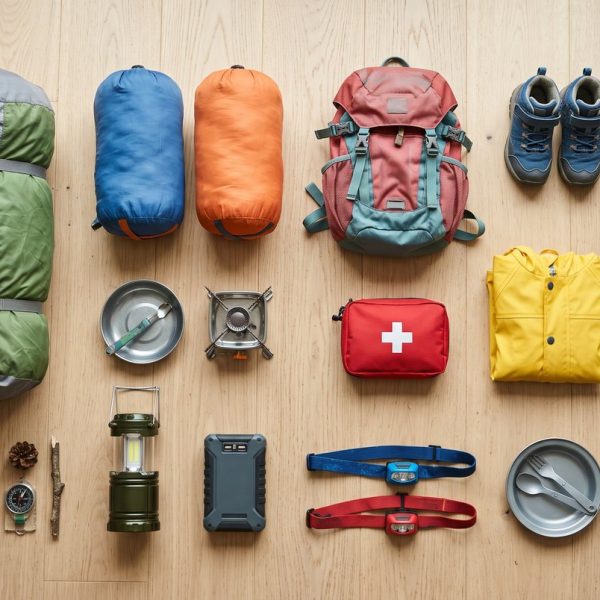
Packing for a family camping trip can feel like packing for a small expedition. Tents, sleeping bags, stoves, lights, clothes for every kind of weather, plus all the extras kids seem to need. Forget one key item and you will notice it at 10 p.m. in the dark.
A good checklist solves most of that stress. This one focuses on gear and gadgets: the equipment that makes camping with children safer, warmer and more comfortable, plus a few modern tools that are worth their space in the car. Use it as a starting point and adapt it to your family.
Shelter and Sleep
- Family tent with enough room for everyone plus bags
- Footprint or tarp under the tent to keep the floor dry
- Sleeping bag for each person, rated for the night temperature
- Sleeping pads or air mattresses, plus a pump
- Pillows or stuff sacks filled with clothes
- A spare blanket for cold nights
Children lose heat quickly at night, so a warm sleeping bag and a good insulated pad matter more than any gadget. If you are not sure a bag is warm enough, add a fleece blanket inside it.
Light
- A headlamp for every family member, including kids
- A lantern for the tent and one for the picnic table
- Spare batteries or a way to recharge
- Glow sticks for kids at bedtime and for marking tent lines
Headlamps are one of the best investments for families. They keep hands free for cooking, reading and late-night bathroom trips. Choose models with a red light mode, which protects night vision and does not wake the whole tent.
Power and Charging
- A charged battery pack for phones and headlamps
- Charging cables, bundled in one pouch
- A car charger for the drive
- A small foldable solar panel for longer trips
Put phones in low-power mode and keep them warm at night, since cold weather drains batteries fast. Download maps, playlists and campground information before you leave, because many campsites have weak or no signal.
Camp Kitchen
- Camp stove and enough fuel for the whole trip
- Lighter and waterproof matches
- Pot, pan, kettle and a long spoon
- Plates, cups, cutlery and a sharp knife
- Cooler with ice packs
- Water jug and a bottle for each person
- Washing tub, biodegradable soap, sponge and towel
- Trash and recycling bags
Clothes for Kids
- Base layers and a warm fleece for each child
- Rain jacket and rain pants
- Warm hat and gloves, even in summer
- Two pairs of shoes, in case one gets soaked
- Extra socks, more than you think
- Pajamas reserved only for sleeping
- A swimsuit and towel if there is water nearby
Pack each child's clothes in a labeled bag or packing cube, one per day, so you are not digging through everything in a dim tent.
Safety and Health
- First aid kit with bandages, tweezers and children's pain relief
- Sunscreen and insect repellent
- A whistle for each child
- Any regular medicines, plus allergy medicine
- A printed list of emergency numbers and the campground address
Gadgets That Earn Their Place
Not every gadget is worth packing, but a few make family camping easier:
- A small Bluetooth speaker for quiet music at camp, used within the campground's quiet hours
- A digital thermometer to check how cold the night will be
- Walkie-talkies for older kids exploring near camp
- A portable fan for hot summer nights in the tent
- A kids' camera so children can record the trip their own way
Gear for Rainy Days
A little rain should not end the trip. A large tarp strung between trees creates a dry space for cooking and playing. Add a few clothespins and a length of rope to hang wet clothes, and pack a bag of dry kindling in case the firewood gets soaked. A deck of cards, a small board game and a book for each child turn a wet afternoon in the tent into a cozy break instead of a crisis.
Fun and Comfort
- Camp chairs, including small ones for kids
- Cards, a ball and a frisbee
- Magnifying glass and binoculars
- Notebooks and colored pencils for a trip journal
- A favorite stuffed animal or comfort item
Turn the List Into a Team Job
Kids remember a trip better when they help plan it. If you want a second opinion on your camping checklist with kids, the family blog Times Bay covers involving children in planning and packing, choosing weather-appropriate clothing and bringing safety gear and entertainment. Print your list, give each child a section to check off and let them pack their own day bag. A child who packed the flashlights is far more likely to know where they are at bedtime.
What You Can Leave at Home
Overpacking is just as common as forgetting things. Most families can skip:
- Large toys that take up car space and get dirty
- A separate outfit for every activity
- Glass bottles and jars, which can break
- Expensive electronics that do not need to come along
- Heavy cast iron cookware for a short first trip
After each trip, note what you never used and what you wished you had. Your checklist will get shorter and smarter every time.
Test Everything Before You Go
The night before the trip, switch on every light, check the stove, inflate the mattresses and charge every device. It takes 20 minutes and saves you from discovering a dead lantern or a leaking air bed at the campsite. With the right gear packed and tested, you can focus on what matters: time outside together.